
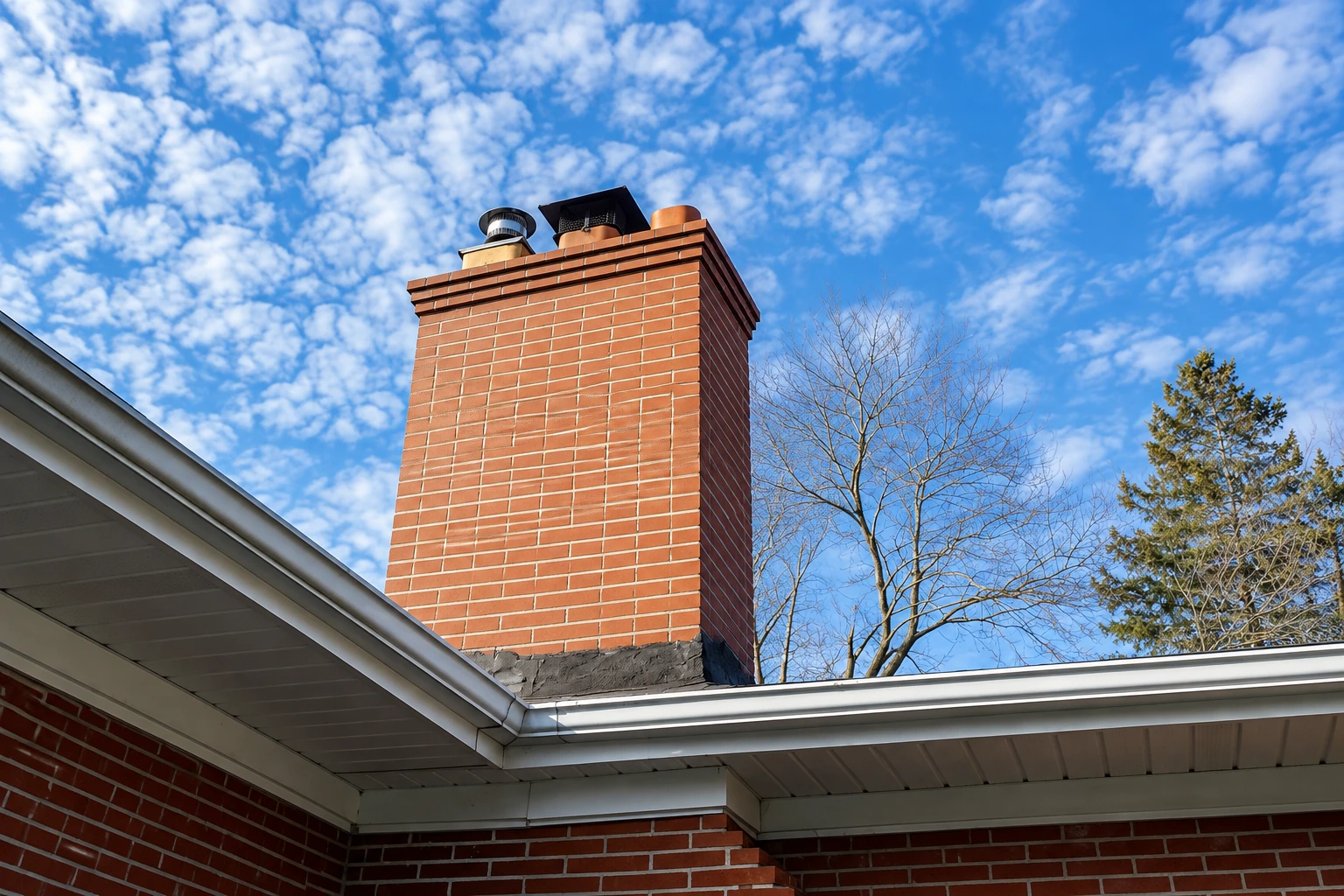
Brick pointing in San Diego CA - tight mortar joints that keep water out
Crumbling or cracked mortar between your bricks lets water into the wall. We clear out the failed joints and refill them with the right mortar.
- Licensed and fully insured.
- Free in-person estimates.
- Replies within 1 business day.
Do your brick joints need repointing?
Brick pointing, also called repointing or tuckpointing, means taking worn or damaged mortar out of the joints in a brick wall to an even depth and packing new mortar in its place. On a San Diego house, chimney or garden wall where the joints have failed, it's one of the best ways to cut down on water getting into the wall.
Most people call us after they notice sand at the base of a wall or joints that have gone soft, and the brick itself is usually fine. The price depends on how many joints have failed, how high up they are and whether the old mortar has to come out by hand. The schedule depends on the size of the job and whether your city needs a permit for it. I'll give you a figure for your own wall when I come out to look.
Is brick pointing right for your house?
Mortar that crumbles to touch
If mortar rubs away as sand under your thumb, the joint has worn out and lets water in.
Joints worn back from brick
When mortar has worn back from the brick face, water sits on that ledge and soaks in.
Holes and gaps in joints
Small holes or missing patches in the mortar give water a straight path into the wall behind.
Cracks along the brick edges
Hairline cracks in the mortar, or a gap where brick meets mortar, mean the joint has let go.
How we do brick pointing on your house
We start by walking each wall and marking the joints that have failed. Where the brick is soft or the joints are thin, we take the old mortar out by hand, because that keeps the brick edges whole and the new joints sit clean. Once the joints are cleared to an even depth and brushed out, we pack in new mortar, shape the joints to match the rest of the wall and clean the brick face before we leave.
If the wall itself is moving, new mortar only hides the problem, so when cracks step down the wall or keep reopening, we look at foundation repair first. On a chimney we often pair pointing with chimney repair up top, and bricks that are cracked or flaking get cut out and replaced through brick repair.
Brick house walls
Most of our pointing is on the walls of brick homes, usually where rain and sprinklers hit hardest. We work a section at a time so the new joints match across the wall.
Chimneys
The joints near the top of a chimney often wear out first because they sit out in the open. We point what's failed and tell you if anything up there needs more than new mortar.
Garden and yard walls
Low brick walls around a yard take water from both sides and from the top down, so their joints often go soft at the cap and the base. These jobs are usually simpler because we can work from the ground.
Matching older joints
On an older house, the repointed joints should look like they were always there. We match the color and the shape of the existing joints so the new work blends in.
What happens after you call about brick pointing?
Call or send us a message
Call (619) 220-2261 or use the form, and tell us which walls are crumbling and about how old the building is. We'll get back to you and set a time for me to come out.
Walk the walls with you
I come out, ask what you've noticed and go joint by joint to see what's failed and what's still sound. You get the estimate right there, so you know the price and which joints I'd leave alone before anything starts.
Check permits, then do the work
Once you say go, we check what your city or the County of San Diego needs for the job. Then our crew does the pointing a section at a time.
Walk the finished job together
When the joints are done and the brick face is cleaned, I walk the wall with you. If something doesn't look right to you, that's the time to tell me.
How much of the wall needs brick pointing?
Usually just the joints that have failed.
Brick industry guidance says only the defective joints need repair, and original joints in good shape are better than repointed ones. Pointing is slow handwork, so every sound joint we leave alone saves you labor and keeps the wall's original look.
When I walk your walls, I mark the joints that have failed and show them to you. If most of a wall has worn out, repointing all of it makes sense and gives an even look. If it's one patch under a downspout or along the top, that's where we work.
Examples of masonry work
Look through these photos of brick, block and stone work to see joint styles and finishes you might want on your own house.
Get a brick pointing estimate for your wall
Tell us where the joints are crumbling or cracked and about how old the building is, and we'll reply within one business day. I'll come out for a free on-site estimate, with no obligation to go ahead.
Why San Diego homeowners call Artisan San Diego Concrete & Masonry for brick pointing
I price it and check it
I'm the one who comes out to look at your wall and give the estimate, and I'm on site checking the work as our own masons and helpers do it. The person who priced your job is the one watching it get done.
In business since 2023
I learned this trade as a helper on a small San Diego masonry crew, watching older masons lay brick and fix what others got wrong, then started this business in 2023. Repair work on worn mortar and brick is what we're best known for.
Licensed and fully insured
We're licensed and fully insured. That matters when a crew is on ladders and scaffolding against your house.
Older brick checked against city rules
Older and unreinforced brick buildings in San Diego fall under extra city rules, so I ask about your building's age when I come out. Call (619) 220-2261 or send us a message to set up a visit.
Brick pointing questions we hear
How do I know if my brick needs repointing?
Walk around your walls and look closely at the joints, because brick industry guidance says repointing is needed when mortar has worn back more than a quarter inch, crumbles, has holes, shows hairline cracks or has pulled away from the brick. Any one of those is worth a call. If you're not sure what you're looking at, have a few photos ready when you call and I'll tell you what I see.
Should new mortar be stronger than the old mortar?
No, the new mortar has to be equal to or lower in strength than the original. A harder mix puts more stress where brick meets mortar and can lead to spalling, the face of the brick breaking away. So a stronger mortar is no upgrade, and we match the mix to the wall.
How long do mortar joints last on a brick house?
Mortar joints typically last more than 25 years, while the bricks themselves may well last over 100. That makes the mortar the part that wears out first, so repointing is normal upkeep on an older brick wall, not a sign the wall has failed.
How much does brick pointing cost in San Diego?
The cost comes down to how many joints have failed and how hard they are to reach, so I give you a figure after I've seen the wall. Taking mortar out by hand on soft brick or thin joints takes longer than on hard brick, and a chimney or a second-story wall costs more than a garden wall you can stand next to. Matching the color of old mortar on a house can also add some time.
What is the best way to remove old mortar without damaging the brick?
For historic brick, guidance says hand chisels and mash hammers, which are short, heavy hand hammers, take more labor but usually do the least damage and give the best result. The same guidance warns that power saws on thin joints, which most brick walls have, almost always break the brick edges, and that power tools in unskilled hands can be disastrous on soft brick. That's why we work by hand on soft brick and thin joints, as described above.
What should I ask a contractor before brick pointing in San Diego?
Ask who on the crew takes out the old mortar, how they do it and what mortar they'll put back. Brick industry guidance says only experienced repointing hands should do this work, because a good bricklayer isn't always qualified to repoint. In California, the masonry contractor license covers putting up brick and masonry walls with or without mortar, along with the cleaning and caulking that goes with that work.
Want me to look at your joints?
Ask for an estimate and I'll come out, look at your walls and give you a price on site.
Other work that often goes with it
Brick pointing rules for older San Diego homes
In San Diego, the city's code exempts maintenance repairs in similar materials from a Building Permit when they're valued at $1,000.00 or less and involve no electrical or mechanical work. That exemption doesn't apply to work on a historical resource or on buildings with unreinforced masonry bearing walls, the walls that hold the building up, or exterior wall parapets, the short walls that rise above the roofline. The city counts a building as unreinforced masonry when it was built under a permit issued before March 24, 1939, with load-bearing walls of materials like burned clay or sand-lime brick, and it says those walls can collapse or be damaged in an earthquake. Where a permit is needed on a lot with a structure 45 or more years old, the city also decides whether a site-specific survey is required. So on a bigger job or an older brick building, whether you need a permit isn't settled until it's checked, and that's why we ask the city or the County of San Diego before we start and take care of the paperwork and inspections when a permit is required.
Around San Diego we mostly see brick on older homes, chimneys and low garden walls, and the joints on those tend to go at the top and along the base first. We work in both city limits and unincorporated county areas, and on jobs in La Mesa and National City we see much the same older brick.